Capsule Review: Midnight’s Children

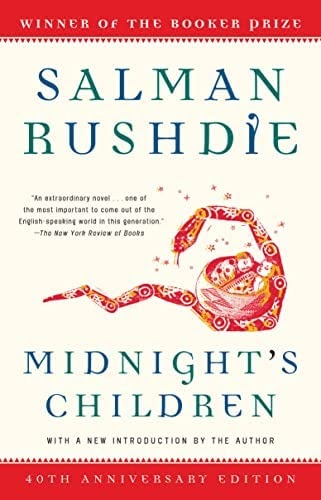
Salman Rushdie, Midnight’s Children (1981)

As a kid I used to read Herb Caen’s column in the San Francisco Chronicle. Usually a series of small items of city gossip, occasionally a single poetic paean to some or other aspect of his beloved Baghdad by the Bay (referring to the historically beautiful, exotic Mesopotamean capital, not the war zone of modern imagination), Caen’s columns created a sense of the city as a community, hip and knowing and a little zany.

When I arrived in New York for college, I assumed it must have its own version of Herb Caen, and I went looking for whoever that might be. Only there wasn’t a Herb Caen of New York, a city altogether too large for such a thing. Herb Caen was unique, and only San Francisco had one.

The same might be said for Midnight’s Children and India, especially Bombay. Surely every country deserves a work of such vibrant intensity, such joyous, protean creativity, such depth, such breadth. But there is only one Midnight’s Children. Even Rushdie couldn’t repeat it. His portrait of Quetta in Shame is gray and flat, and his portrait of New York in Fury feels uncomfortably like a tourist writing a parody of Midnight’s Children. Only the London of The Satanic Verses comes close.

Never read an insider’s account of a place and assume that’s what you’ll find when you arrive as an outsider. I came to Bombay with Midnight’s Children in my head. I went to the Hanging Gardens of Malabar Hill to find an ordinary park, and I went to Chowpatty Beach to find a dirty strip of sand where I was harrassed by a snake charmer with a defanged cobra, and I saw the lights come up on the Strand and was unimpressed by a long line of dull orange globe lamps. There was no magical realism waiting for me in Bombay, just the all-too-real smog and heat and poverty and decay and administrative ineptitude most travelers find.

Midnight’s Children roams the subcontinent, of course: Kashmir, Pakistan, Bangladesh. I mostly missed its other locations. But I was there in Bombay, looking for the magic. It’s not Rushdie’s fault that I mostly missed it. What I found in Bombay was important to me, even if it wasn’t exactly pleasant. But that’s a story for another day.

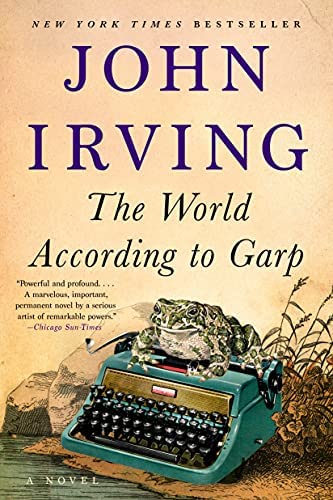
Capsule Review: The World According to Garp

John Irving, The World According to Garp (1978)

The World According to Garp was an enormous hit novel that won a National Book Award in 1980 and became a hit Robin Williams movie in 1982. What that means, if you’re in a Kathmandu bookshop and looking for something to take with you into the Himalayas, is that here is a book that promises to be both readable and not entirely stupid. And at 542 pages, it will keep you busy for many an evening, but fortunately it comes in convenient mass paperback format.

It’s an odd book to take on a Himalayan trek. In fact, it’s just an odd book. All the way back in 1978, one of its main characters is a feminist and another is a trans woman, and it delves, albeit a little ham-fistedly, into issues of male rage and reactionary feminism. There’s also some child rape for good measure. And, because this is John Irving, Vienna and a bear.

Garp is a self-indulgent novel — Irving throws in a long short story and the opening chapter of an entirely different novel, both written by the titular Garp, who’s a novelist — and I felt too often that characters were aggregations of characteristics rather than fully realized people. Its gender politics are out of date, understandably, but I’m not sure how well meaning they were even in their own time. There are also themes of death and parental fears of losing a child, which mean a little more to me now that I’m a parent of an eight-year-old than they did when I was a twenty-three-year-old trekking in the Annapurnas without much consideration for any fears my parents might have had.

What should have stuck with me then, when I was a young aspiring writer with no clue what to write and no great gift for creating either plots or characters, were the parts of the novel about how to be a writer. But when I came back to it, the only things I could remember were the mutilations: the women who cut out their own tongues as a kind of protest in support of a girl whose tongue is cut out by a rapist, and then the horrifying scene where Garp’s wife bites the cock off one of her college students during a car accident.

Does any of this make Garp a good novel today? I’m not sure. I wouldn’t put it high on my list of books anyone should read, but if you’re going somewhere far away from all available entertainments for a period of weeks, where you’ll be physically exhausted and need something diverting before you fall asleep or to pass the time on a rest day by a hot spring, you could do worse.

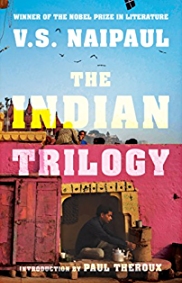
Capsule Review: The Indian Trilogy

V. S. Naipaul, An Area of Darkness (1964), India: A Wounded Civilization (1977), India: A Million Mutinies Now (1990)

I never liked V. S. Naipaul. I couldn’t get through A House for Mr. Biswas in college — so much whining! — and I found his essays in The New York Review of Books, which I read religiously in the nineties, to be tedious and cantankerous. So I was surprised to find that of all the travel accounts I have so far read of India, I like his the best.

Naipaul is, of course, a capable writer, a crafter of fine prose, and a skilled storyteller. What puts him above the other India writers, though, is the same cantankerousness that made him hard to take when reviewing other people’s work. More than anyone else, Naipaul owns up to the awfulness India brings out in him: the rages, the pettiness, the yelling at impassive bureaucrats, the scolding of poor hotel servants. He doesn’t hide it the way most of the other authors do, or downplay it, or try to excuse himself for it. He tells it in full, including the shame that comes afterward.

There are three books here. Naipaul is the grandchild of Indian brahmins who came to Trinidad as indentured servants. He is Indian and Hindu by heritage, but not by birth or nationality. An Area of Darkness is his account of his first foray into his ancestral homeland, and it is full of rich detail about the miseries and annoyances of Indian travel. India in 1964 was, of course, much more primitive than the India I encounter thirty-three years later, but it’s extraordinary how many of Naipaul’s experiences were similar to my own. Subsequent writers have called this book out for its obsession with shit — literal, actual shit — but Naipaul’s is on to something:

“It is possible, starting from that casual defecation in a veranda at an important assembly, to analyse the whole diseased society. Sanitation was linked to caste, caste to callousness, inefficiency and a hopelessly divided country, division to weakness, weakness to foreign rule. This is what Gandhi saw, and no one purely of India could have seen it.”

He isn’t just writing about shit to make fun of India or Indians, or to complain, but to recognize that the way sanitation is handled, or mishandled, says something important about the society as a whole. Again, there is a sort of bravery here in saying these things out loud, in pointing to the disgusting things and saying, without apology or excuse, that they are disgusting. Most other writers on India, especially foreign writers, feel a reflexive need to apologize for noticing, to explain away, to demonstrate their thoughtful respect for India and their understanding that its problems are not all of Indians’ own making. Naipaul alone is brave enough to show his loathing, both for what he sees and for himself for the ways he reacts.

In A Wounded Civilization, Naipaul attempts to reckon with the land that so overwhelmed him on his first visit. It’s the slightest of the three books, and it sticks in the memory less, but there’s a lot here, especially about Hinduism. And Naipaul begins to talk to Indians in a serious way, which gives depth to his writing.

That method becomes the main thrust in A Million Mutinies Now, which is probably the best of the three books, and certainly the most celebrated. By the late eighties, Naipaul is old enough to look beyond himself, and the entire book is essentially interviews with interesting Indians. There are gaps — Naipaul speaks to very few women, even in a chapter all about women’s magazines, and he mentions the poor, the backward castes, the harijans and adivasis, but rarely speaks to them either. He is a Western intellectual and also a brahmin, and he remains so throughout his travels.

He also falls into a trap that I notice is common to writers on India, which is considering Indian poverty somehow a moral burden when you are in India, but not when you’re elsewhere. I see this a lot, in Mark Tulley and Elizabeth Bumiller and others, and it’s a fallacy. Indian poverty is certainly much easier to ignore when one is in Manhattan than when one is in Calcutta, but there’s no particular reason why one should be more or less responsible for it based on where one happens to be, or on the accident of birth and citizenship. In terms of practicalities, it makes sense for people in Calcutta to focus more on Calcuttan problems and for New Yorkers to work on New York, but I find it disingenuous for a middle-class American to wonder how Indians can justify living a far more frugal middle-class life amidst such poverty. And this is particularly so for post-colonial nations like India, whose looted wealth makes our middle-class existences possible.

But that’s something of a side issue. Overall, A Million Mutinies Now is a fine book that, like the rest of the trilogy, takes unusual risks in the service of authorial honesty about his own flaws. Of the three, An Area of Darkness resonated most deeply with my own project, but anyone writing about India would be well served by these three powerful, honest, cantankerous books.

Why Learning Writing is Still Necessary in a ChatGPT World

When traveling through Laos a few years back, I visited a backcountry travel shop owned by a German man. As I entered, he was berating his Lao staff, in a mixture of Laotian and English, for having mishandled travelers’ enquiries while he was out of town. People would ask seemingly simple questions — Is there a bus to such-and-such town? Can I take a boat to the border? — and get convoluted answers that bogged down in irrelevant details. Instead of “Yes, you can take a bus there,” it was, “There is a bus that starts in Town A and goes to Town B first before arriving here, but it’s a dirty bus and usually late.” The owner couldn’t understand how his employees kept making these kinds of mistakes.

This was a few weeks after I’d been in Cambodia, hanging around with a local woman who’d gotten a seventh-grade education and couldn’t use Google Maps navigation on her phone because no one had ever taught her to read a map.

It turns out that intellectual skills we take for granted — reading a map, organizing ideas in particular ways — are not inherent, but learned. I tried to get this across to the German travel shop owner so he could have a little compassion for his team, and he seemed to get it, with a mixture of exasperation and resignation. He and I, though from different countries, had each spent years of our lives mastering certain formal structures of information packaging: the sentence, the clause, the paragraph, the multi-paragraph essay. We had been asked to find the topic sentence in a paragraph, and informed that this often came first, with detailed examples or supporting ideas placed afterwards. We had been given the task of replicating such paragraphs. As we grew older, the scale grew to essay length, requiring more complex layering of thesis sentences, topic sentences, supporting arguments, conclusions. We have come to think of these formal structures as the right way to organize information to be communicated to others, and we’re able to do it pretty fluently.

I now live in South Korea, where this kind of structured writing is much less often taught, and it shows. In discussions with colleagues, I often find that they’re not prepared to defend viewpoints or assertions, and there’s a tendency to fall back on authority (“A VP has requested it”) or consensus (“Everyone already agreed”) rather than to provide explanations in the way that I think of them.

Organized thinking, it turns out, is a learned skill. And writing is a very good way to learn it.

Calculators can’t count

ChatGPT and its inevitable successors will raise certain practical questions. A certain amount of in-class writing will be necessary to verify that students can actually do what their assignments suggest they can do. This has, of course, been the case for a long time, and students have been able to cheat on assignments but not on hand-written final exams. Some students will cheat anyway, others will half-cheat by checking their work in various ways (already a possibility for a long time with grammar checkers and the like), but in the end, they will still need to do the work necessary to develop the skills to pass the in-class exams.

But if ChatGPT can write so well, why should anyone except specialists learn how to do it? Technology has preempted all kinds of other skills. We don’t expect students to learn to start a fire or skin an animal or gather wild edible plants. We don’t teach how to hitch a horse or drive a stick-shift. Latin is right out. Cursive is ending. Why keep writing in the mix?

It’s there for the same reason that arithmetic has stuck around in a world of calculators: it’s a basic skill for organizing information, in a way that video editing is not. While you can (and mostly should) use a computer for complex arithmetic, it’s important at some point to get a sense of how the arithmetic works, because this is a basic way of organizing information computationally.

One could argue that we have abandoned certain skills we should not have. With photography we have given up teaching drafting as a basic skill, and I think that’s possibly detrimental to our ability to organize information in certain ways. And we may come to a future point where most people really don’t need to learn to write as a pedagogical path to learning to organize information. But for now, humans communicate largely in language, Even if you can get a machine to do some of the grunt work for you — writing cover letters, say, or cleaning up your resume — the ability to construct thoughts and ideas remains important, and there is no better way to learn that than through the discipline of writing.

I have seen a great deal of hand-wringing over ChatGPT, particularly in the context of education. If any high school or college student can go to ChatGPT (or its future, smarter iterations) to get a reasonably well crafted essay without grammar errors, what’s the point of teaching writing? And how can we know whether students are doing their own assignments or just getting everything from an AI bot?

I